How to Stop Grinding Your Teeth atNight
What your jaw is doing while you sleep, and what actually helps


How do you stop grinding your teeth at night?
You cannot always stop grinding at night by willpower, but you can protect your teeth and address what drives it. A custom night guard protects the teeth. Cutting back on alcohol, caffeine, and tobacco, especially in the evening, can help. And because grinding is so often tied to disordered breathing during sleep, it is worth checking your airway.
Many people grind for years without knowing it. The first clue is often something else: a sore jaw in the morning, a chipped edge, a partner who hears it at night, or a dentist who notices the enamel is flattening.
What is the difference between grinding and clenching?
There are two kinds of bruxism, the clinical term for grinding and clenching. Sleep bruxism happens at night, often as rhythmic grinding. Awake bruxism happens during the day, usually as clenching, often during concentration or stress.1
Awake clenching is the more common of the two, reported in roughly a fifth to a third of adults. Sleep grinding is reported in up to about one in seven.1
Why do people grind their teeth at night?
There is rarely one cause. Research consistently links bruxism with alcohol, caffeine, and tobacco use.1 Many people notice it more during stressful periods.
The sleep connection
In my experience, grinding is very often a sign of disordered breathing during sleep, known as obstructive sleep apnea, or OSA. The research points the same way: a large 2023 sleep-lab study of more than 900 adults found that about half of those with sleep apnea also grind their teeth at night.2
This is where medicine and dentistry need to work together. A sleep physician orders the sleep study. Then the sleep and dental team, together, customize the approach and choose the therapies that correct the problem. The dental team is best positioned to get to the root cause, and to deliver solutions that patients accept and that last.
What does grinding do to your teeth and jaw?
Grinding is commonly associated with worn or chipped enamel and tired, sore jaw muscles, although research on how much damage it causes varies. It also puts extra force on dental implants.1
What actually helps?
Check your airway first
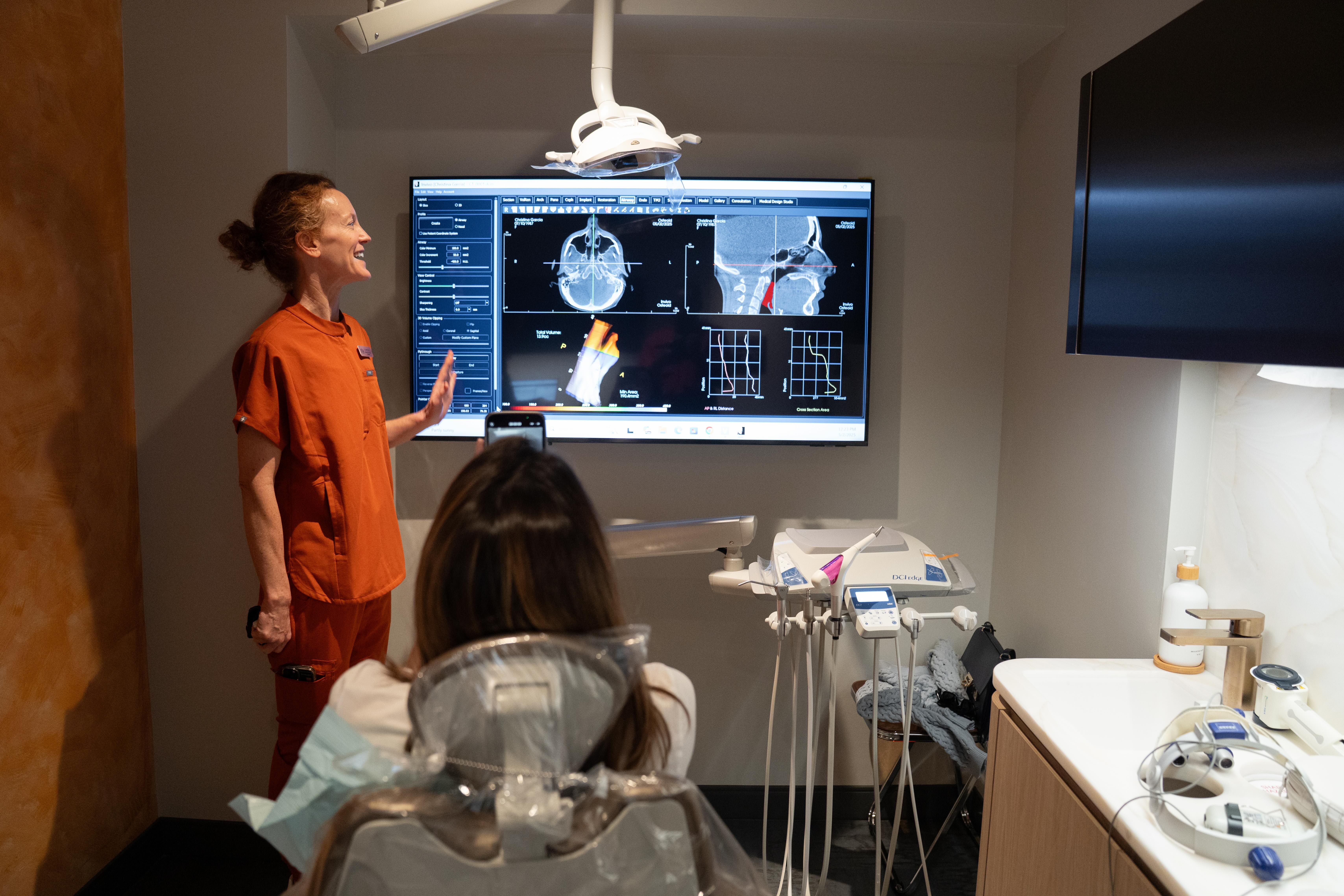
Because grinding and sleep apnea so often occur together, it is wise to screen for sleep apnea before fitting a standard night guard.3 If apnea is part of the picture, the sleep and dental team design a plan around your airway. Read more in breathing, sleep, sugar, and longevity and what is airway dentistry.
A custom night guard
A night guard does not stop the grinding itself, but it takes the force so your teeth do not. Reviews consider occlusal appliances effective for managing bruxism; the evidence for most other treatments is weaker.1
Evening habits
Less alcohol and caffeine in the evening, and no tobacco, remove some of the most consistently identified triggers.1
Daytime awareness
For clenching during the day, simply noticing it helps. Lips together, teeth apart, jaw relaxed: that is the resting position to aim for.
When should you see a dentist?
If you wake with a sore jaw, notice your teeth looking shorter or flatter, or a partner hears grinding, it is worth an evaluation. At Smile House, we look at the wear on your teeth, your jaw, and your airway together, as part of Mouth Mapping®. If sleep is part of the story, our sleep and airway team works with your sleep physician.
If you would like a longevity-focused oral evaluation, our team would be honored to guide you. You can book online, call or text Smile House Tribeca at (212) 725-1111, or call JBL New York City on the Upper East Side at (212) 734-6111.
Your jaw is working hard while you sleep. It deserves a closer look.
Dr. Jonathan B. Levine, DMDQuick answers.
Does a night guard stop teeth grinding?
No. It protects your teeth from the force of grinding, but it does not stop the grinding itself. Finding what drives it is the other half of the plan.
Is teeth grinding linked to sleep apnea?
Very often. About half of adults with sleep apnea also grind their teeth at night. If you grind, it is worth finding out how you breathe during sleep.