Breathing, Sleep, Sugar, and Why Oral Health Is a Pillar ofLongevity
The mouth is not where health begins to fail. It is where the signals appear first.


What does mouth breathing do to the body?
Breathing through the mouth, especially at night, skips the filtering and nitric oxide the nose provides. It dries the mouth, shifts its bacteria, and is linked to snoring and disrupted sleep. In children, chronic mouth breathing is associated with changes in how the jaw and face develop.
The patients who protect their long-term health are not the ones who treat symptoms. They are the ones who understand systems.
And the mouth is where almost every system leaves a trace.
How you breathe. How well you sleep. How your body handles sugar. These are not separate concerns. They are deeply connected. And they all show up, in one form or another, inside the oral environment.
What does mouth breathing do to your body?
Most people have never been asked, in any clinical context, how they breathe. That needs to change.
The nose was designed for breathing. Breathing through the nose and breathing through the mouth are not the same thing. The nasal passages do something the mouth cannot: they filter incoming air, regulate its temperature, and trigger a cascade of biological responses that affect blood pressure, immune defense, and oxygen delivery throughout the body.1
When breathing shifts chronically to the mouth, that whole system is bypassed. The oral environment dries out. The balance of bacteria in the mouth shifts. And during sleep, the dynamics of the airway change in ways that compound over time.
If you wake with a dry mouth, if you snore, if you feel unrested after a full night, the question worth asking is not just what happened during those hours.
The question is: how were you breathing?
How does the airway shape sleep?
Sleep medicine and dentistry are not separate conversations. They share an anatomy.
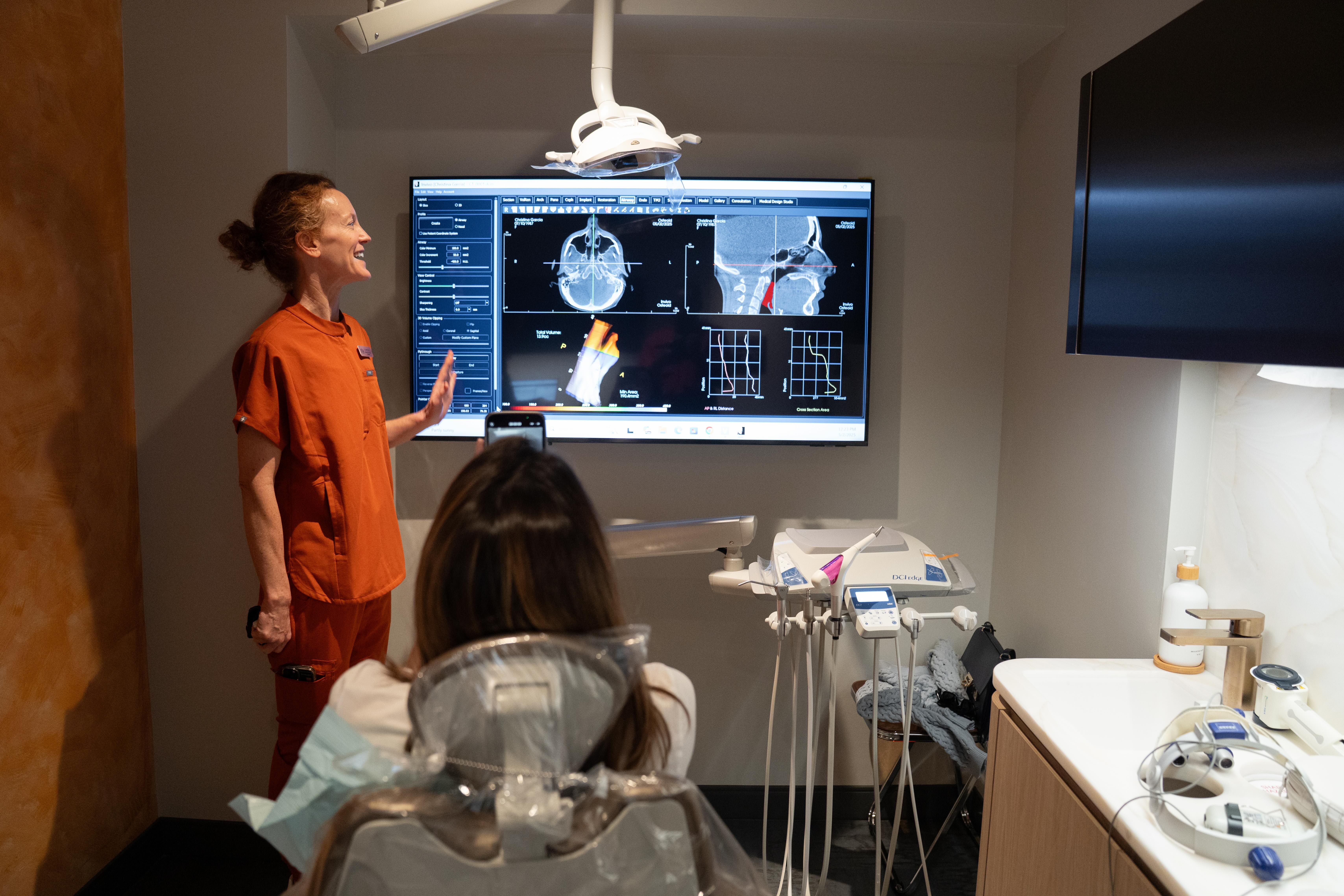
The position of the jaw, the tone of the tongue, the structure of the palate: these all shape what the airway does during sleep. A dentist who evaluates these structures is not overreaching. They are reading signals that deserve to be read.
Obstructive sleep apnea, the condition in which the airway repeatedly collapses during sleep, affects a significant portion of adults, most of whom have never been diagnosed. Undiagnosed, it does not simply cause fatigue. It is linked to elevated blood pressure, heart disease, diabetes, and a meaningfully shorter life.3
Oral appliances that reposition the jaw during sleep are a clinically supported option for many people with sleep-disordered breathing.9 Breathing exercises that restore nasal breathing and strengthen the muscles around the airway have been shown to meaningfully reduce the severity of sleep apnea in adults.4
Most people do not know their dentist can be part of that conversation. That is why airway screening is part of our sleep and airway care.
Why is sugar a whole-body issue?
The relationship between sugar and cavities is well understood. But sugar is doing something larger.
The mouth is home to hundreds of bacterial species, most of them beneficial. That community is not fixed. It responds to what we eat, how often we eat, and how well we care for it. When fermentable carbohydrates dominate the diet, the balance shifts toward bacteria that cause harm, not just locally in the mouth, but beyond it.
I have written about where these bacteria go: to the gums, to the heart and the brain. They travel.
And the inflammatory signals they generate, running in the background as long as the imbalance persists, affect metabolism, cardiovascular health, and how the body ages.5
Reducing sugar is not just about protecting your teeth. It is about protecting the microbial environment that influences your health far beyond the mouth.
The thread connecting all of it
Breathing, sleep, and sugar all lead to the same place when they are disrupted.
Inflammation.
Chronic, low-grade, quiet inflammation that the body generates when it is under sustained stress from any of these sources.7 The kind that does not hurt. The kind that builds over years. The kind that shows up eventually as heart disease, metabolic dysfunction, cognitive decline.68
The mouth sits at the intersection of all three drivers. Which is why the oral environment is not a peripheral concern for someone thinking about longevity. It is a central one.
What this looks like in practice
At Smile House, a longevity-focused evaluation is not about looking for cavities. It is about reading the mouth as a record of how the body has been doing.
We look at breathing patterns and airway structure. We look at signs of sleep disruption in the enamel and the jaw. We look at the gum tissue as a window into the body's inflammatory state. We look at the microbial environment and what it might be telling us about diet, digestion, and immune health.
When we find something, we address it. Sometimes that means treatment. Often it means a conversation with another member of your care team, a sleep physician, an internist, a nutritionist, because these findings belong in a bigger picture.
This is what Mouth Mapping® is designed to see. Not isolated dental problems. A connected story.
If you would like a longevity-focused oral evaluation, our team would be honored to guide you. You can book online, call or text Smile House Tribeca at (212) 725-1111, or call JBL New York City on the Upper East Side at (212) 734-6111.
The mouth keeps the record. It is worth reading.
Dr. Jonathan B. Levine, DMDQuick answers.
How do I know if I breathe through my mouth at night?
Common signs include waking with a dry mouth, snoring, and feeling unrested after a full night. A partner often notices first.
Can mouth breathing be corrected?
It depends on the cause. A blocked nose may need an ear, nose, and throat specialist. Weak airway muscles may respond to breathing exercises. A narrow jaw may need dental or orthodontic care. The first step is finding out why.